
How to Wear a Silk Scarf as a Headband UK (2026 Style Guide)
A silk scarf is one of the most versatile accessories you can own. The same piece works as a headband, a ponytail tie, a neckerchief, a wrist accessory, or tied to a bag. This guide covers how to wear one and which ones are worth buying.
The silk scarf has been a wardrobe staple since the 1950s and has not gone anywhere. What has changed is how people wear them — less formal, more creative. A square silk scarf folded and tied as a headband is one of the simplest ways to elevate a basic outfit. This guide covers the main ways to wear one and which scarves work best for each style.
Folding a scarf as a headband
Take a square scarf and fold it diagonally into a triangle. Then roll or fold from the long edge towards the point until you have a long strip roughly 5–7cm wide. Tie it around your head with the knot at the top for a 1970s look, at the side for something more relaxed, or at the back of the neck for a cleaner finish. The width and how tightly you fold affects the look significantly — a wider fold is more casual, a narrow fold is more polished.
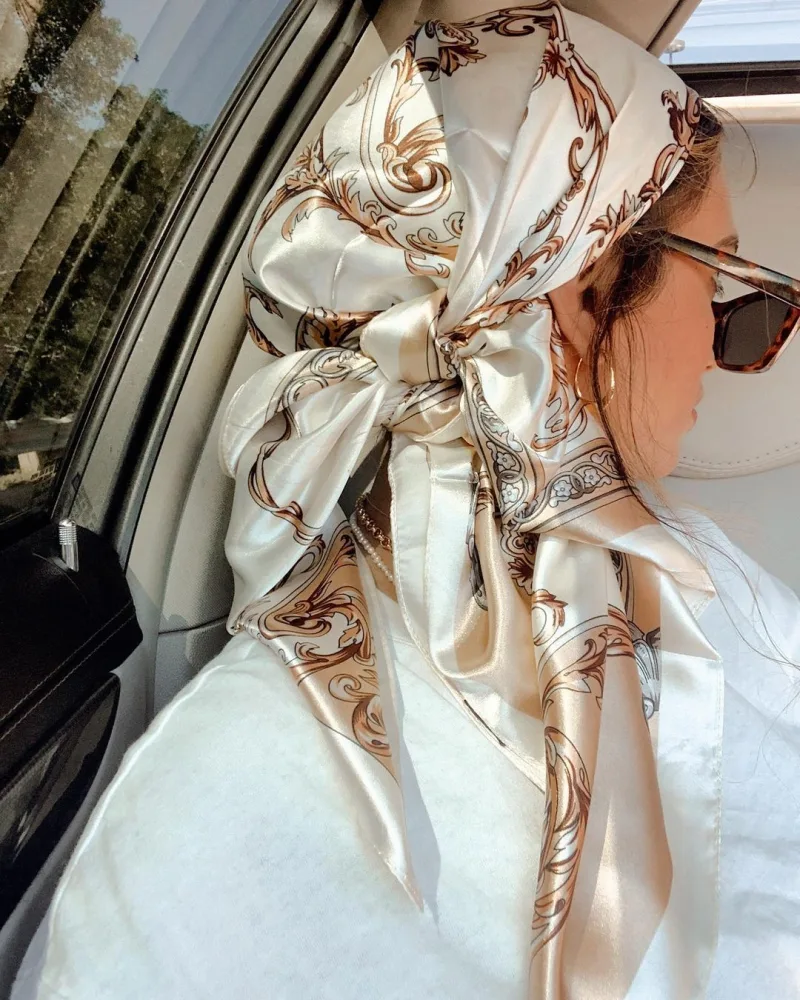
Square satin scarf in a variety of prints. Versatile enough to wear as a headband, neckerchief, or tied to a bag handle. The satin surface drapes smoothly and holds a knot without slipping. Rated 4.8 stars from nearly 2,000 orders.
Skinny scarves and ribbon ties
A skinny silk scarf — sometimes called a foulard or a ribbon scarf — is narrower than a standard square and is designed to be worn tied rather than folded. It works as a ponytail tie, a headband worn loose, or threaded through the loops of a bag. The narrower width gives a more delicate, contemporary look compared to a folded square.
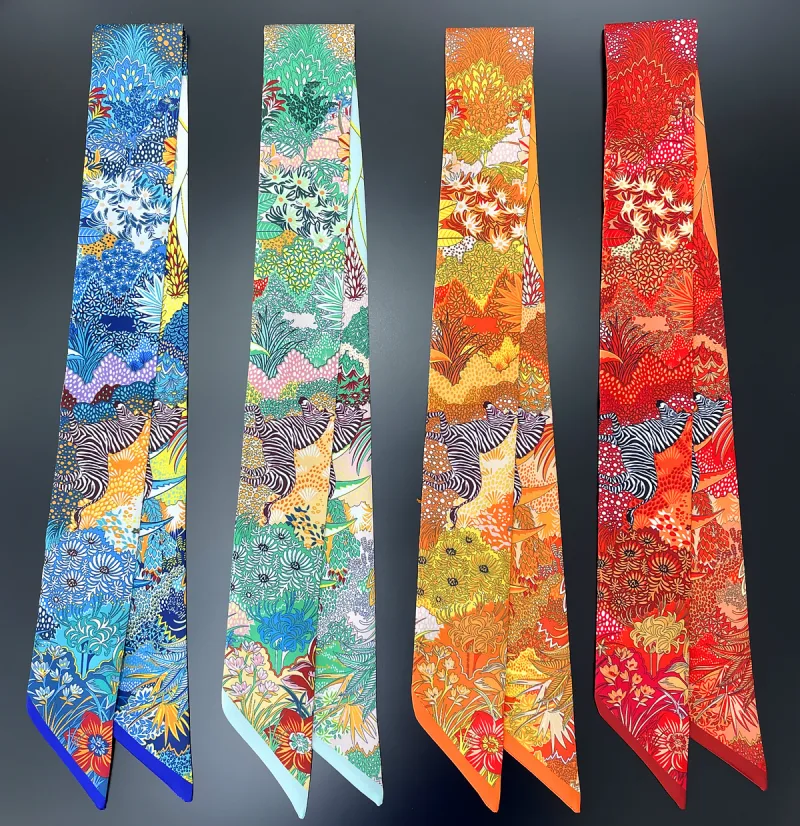
Narrow silk-feel scarf with a bold floral and zebra print. Works as a headband, ponytail tie, or neck accessory. The lightweight fabric ties easily and holds its shape without bunching. Rated 4.8 stars.
Durag and turban-style wraps
For a more complete head wrap, a durag or turban-style bandana covers more of the head and gives a more deliberate, fashion-forward look. These have moved well beyond their original sportswear context and appear regularly in mainstream styling. They also serve a practical function for protecting natural hair, locs, or braids overnight.
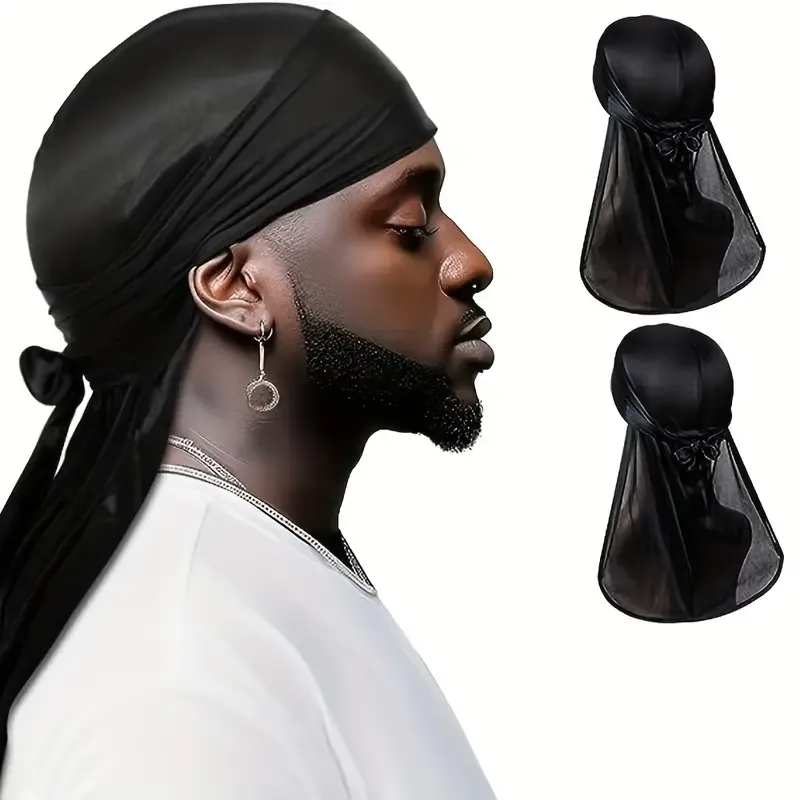
Long-tail silky fabric that can be tied in multiple styles. Works as a durag, turban, bandana, or pirate-style headwrap. Unisex. Rated 4.9 stars. The extra length gives more styling options than standard bandanas.
Bohemian print headbands
Pre-knotted or elasticated turban headbands give you a finished look without needing to fold and tie. They are quicker to use than a loose scarf and stay in place more reliably. The vintage cross-knot style has become particularly popular — it gives the look of a tied scarf without the adjusting.
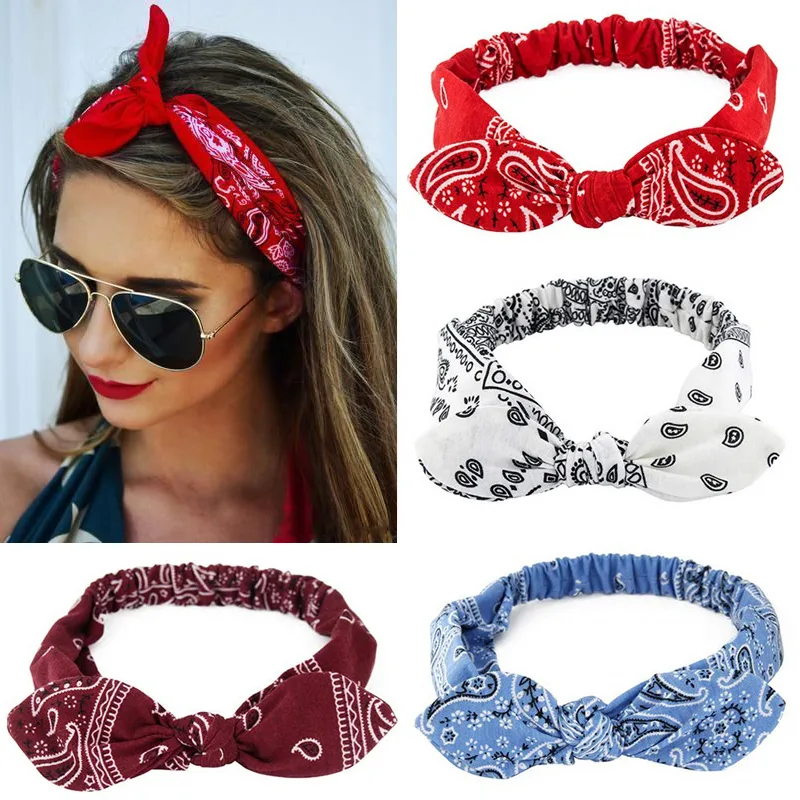
Pre-formed cross-knot design in boho print fabrics. Elasticated back for a secure fit without tying. 1,650 orders and rated 4.6 stars. An easy option for achieving the scarf-headband look without any folding or knotting required.
Square satin or silk scarves work best because they fold flat and hold a knot cleanly. Chiffon is lighter and more prone to slipping. Jersey scarves are casual and comfortable but less refined. For a polished look, stick with satin or silk-feel materials.
Fold it into a narrower band — wider folds catch more air and slide. Tie it firmly with a double knot. On very smooth or freshly washed hair, a thin layer of dry shampoo at the hairline gives the fabric more to grip against.
Yes. Fold into a wider band for more coverage and tie looser to accommodate the volume. Turban-style wraps like the durag listed above are often a better fit for thick or natural hair than a folded square, as they are designed to cover more surface area.
Shop scarves and accessories — Beauty & Health →