
Best Robot Vacuum Cleaner UK 2026 - Do They Actually Work?
Robot vacuum cleaners have improved dramatically in the last three years. Modern units navigate intelligently, clean carpets effectively, and can be scheduled from your phone. But are they worth buying for a typical UK home? This guide gives you an honest answer.
The robot vacuum has gone from a novelty gadget to a genuinely useful appliance. The difference between a 2020 robot vacuum and a 2026 model is significant: laser navigation that maps your home accurately, strong suction on carpets, quiet operation, and app control that lets you clean a specific room while you are in another. This guide covers what to look for and the best option available in the UK in 2026.
Are robot vacuum cleaners actually worth buying
For daily maintenance cleaning, yes. A robot vacuum running while you are at work maintains a baseline level of floor cleanliness that means your weekly manual vacuum is shorter and easier. It does not replace a deep clean vacuum entirely - a robot vacuum cannot clean stairs, cannot reach deep into thick carpet pile as effectively as a direct-drive upright, and needs its bin emptied regularly. But as a tool for keeping floors clean between manual sessions it is genuinely useful.
The biggest practical consideration is whether your home suits one. Homes with lots of low furniture where a robot will get stuck, several different floor levels (robots cannot go up stairs), or large areas of thick rug are less suitable. Open-plan homes with hard floors and medium-pile carpet are ideal.
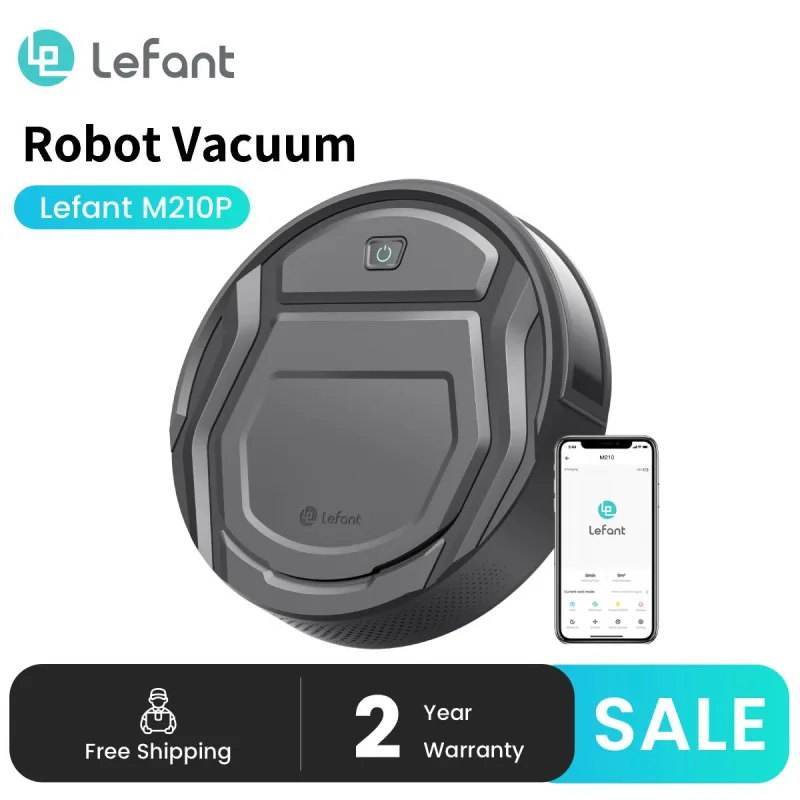
The Lefant M210 Pro represents the current generation of smart robot vacuums: laser navigation that builds and remembers a map of your home, app control for scheduling and room-specific cleaning, Alexa and Google Home voice control, and auto self-charging (it returns to its dock when the battery runs low and resumes cleaning when charged). Rated 5.0 stars. The laser navigation is the critical difference from older random-pattern units - it moves in efficient parallel lines rather than bouncing around randomly, covering the whole floor area systematically and remembering no-go zones you set in the app.
What to look for in a robot vacuum
Navigation type is the most important spec. Random navigation bounces until it runs out of battery, leaving patches uncleaned. Laser (LiDAR) navigation maps the room and cleans methodically. For any home larger than a single room, laser navigation is worth the price difference. Suction power in Pa (Pascals): 1500-2000Pa handles hard floors and medium carpet well. 2500Pa+ handles thicker carpet. App control lets you schedule cleaning, set no-go zones, and clean specific rooms while you are out. Auto-charging is essential - the robot should return to dock when low on battery and resume cleaning automatically.
Maintaining a robot vacuum cleaner
Empty the dustbin after every 1-2 sessions (robot vacuums have small bins by design). Clean the main brush roll weekly - long hair wraps around it and reduces pickup efficiency. Clean the side brushes monthly. Wipe the laser sensor with a dry cloth if navigation becomes erratic. Replace the filter every 2-3 months or when suction drops noticeably. Clear the floor before each session - robot vacuums cope poorly with cables, socks, and small objects that can jam the brush roll.
Yes, modern robot vacuums with 1500Pa or more suction clean low to medium pile carpet effectively. Thick shag rugs and deep pile carpet are less suitable as the robot can get stuck and suction is less effective in very deep pile. For a typical UK home with medium-pile carpet and some hard flooring a quality robot vacuum handles both surfaces well.
Yes - pet hair is one of the main reasons people buy robot vacuums as running it daily prevents hair buildup. Choose a model with a rubber brush roll rather than a bristle roll as rubber is far less prone to hair tangling. The Lefant M210 Pro above handles pet hair well on both hard floors and carpet.
A typical living room takes 15-20 minutes. A whole flat or small house takes 45-90 minutes depending on size and furniture density. Laser-navigating robots are significantly faster than random-pattern robots as they cover the floor area methodically without repeating sections.
Quality robot vacuums include cliff sensors that detect drop-offs and reverse before falling. The Lefant M210 Pro includes cliff sensors. However stairs with unusual edge profiles or very dark carpets at the top of stairs can occasionally confuse sensors - use virtual no-go zone barriers in the app for additional safety.
Shop home appliances and electronics — Electronics →