
Best 3D Printer Filament Dryers UK 2026 - Dry Box Guide
Filament moisture is one of the most common and least discussed causes of 3D print failure. A filament dryer removes absorbed moisture and keeps material in optimal condition for printing.
PLA PETG Nylon and TPU all absorb moisture from the air over time. Wet filament produces characteristic defects: stringing between features bubbling and popping during extrusion rough surface finish and weakened layer adhesion. A filament dryer eliminates these problems.
Active drying vs sealed storage
An active dryer uses a PTC heater to heat the filament to 40-65 degrees C depending on material. This drives out absorbed moisture over 4-6 hours. A sealed dry box uses desiccant to maintain low humidity without heat. An active dryer that also functions as a sealed storage box during printing gives both benefits in one unit.
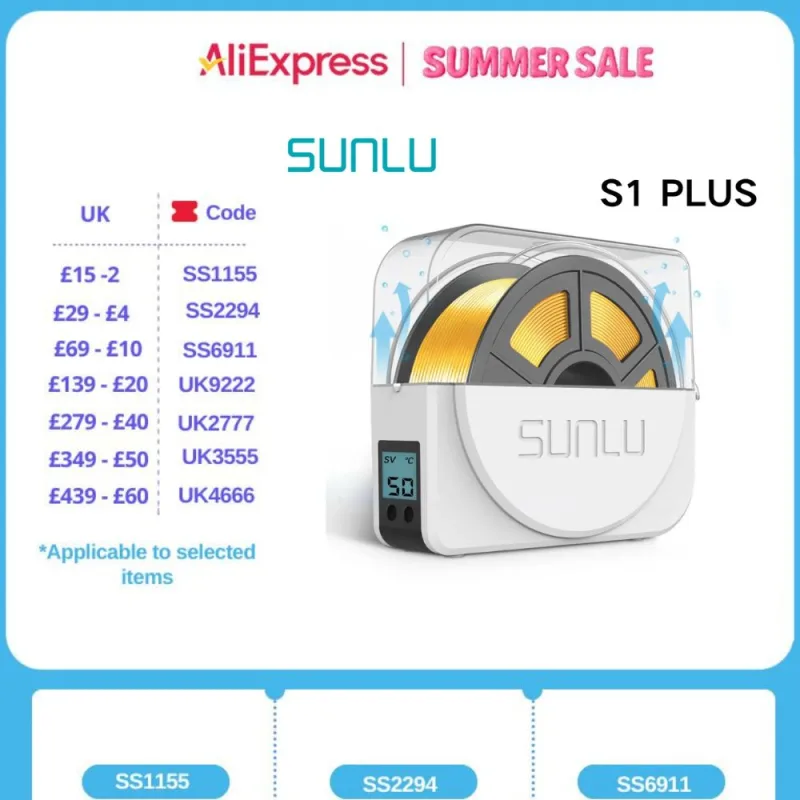
SUNLU S1+ is one of the most widely used filament dryers in the 3D printing community. Active PTC heating with adjustable temperature and timer. Holds one 1kg spool. The filament feeds directly from the dryer into the printer during printing. Rated 4.8 stars from 954 orders.
Which materials need drying most urgently
Nylon absorbs moisture fastest and requires drying after even a few hours of open-air exposure. PETG and ASA benefit from drying after a day or more of open storage. PLA is the most forgiving but still produces better results when dried. TPU absorbs moisture and becomes stiffer and more prone to jamming when wet.
Yes with care. A food dehydrator at 45-50 degrees C works well for PLA and PETG. A domestic oven set to its minimum temperature works but is less precise. A purpose-built filament dryer is safer and more convenient for regular use.
PLA: 4-6 hours at 45 degrees C. PETG: 4-6 hours at 55 degrees C. ASA and ABS: 4-6 hours at 60-65 degrees C. Nylon: 8-12 hours at 70 degrees C. Severely wet filament may need longer.
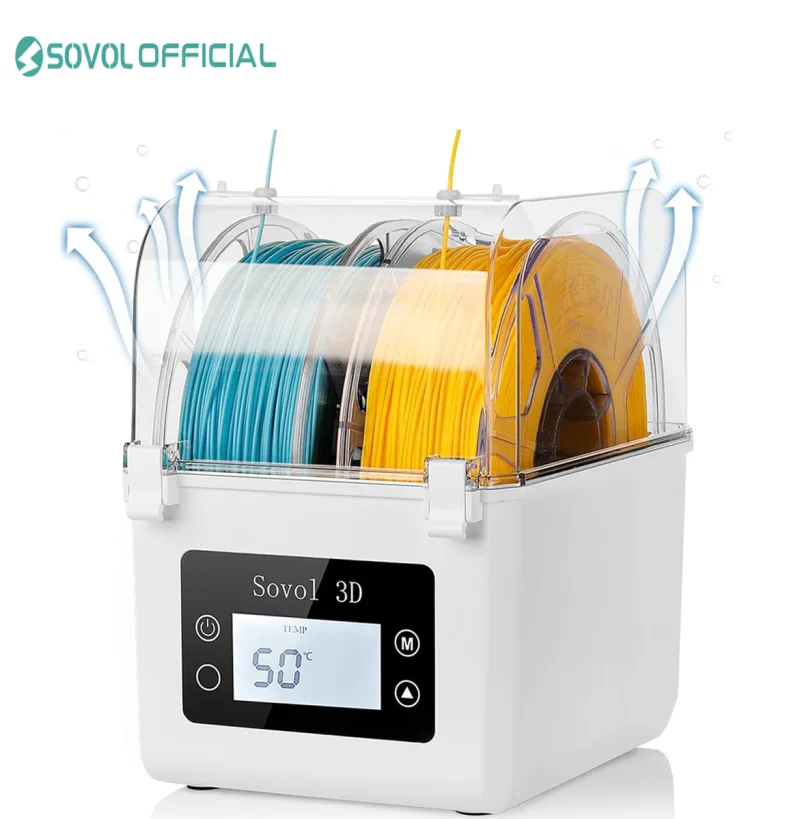
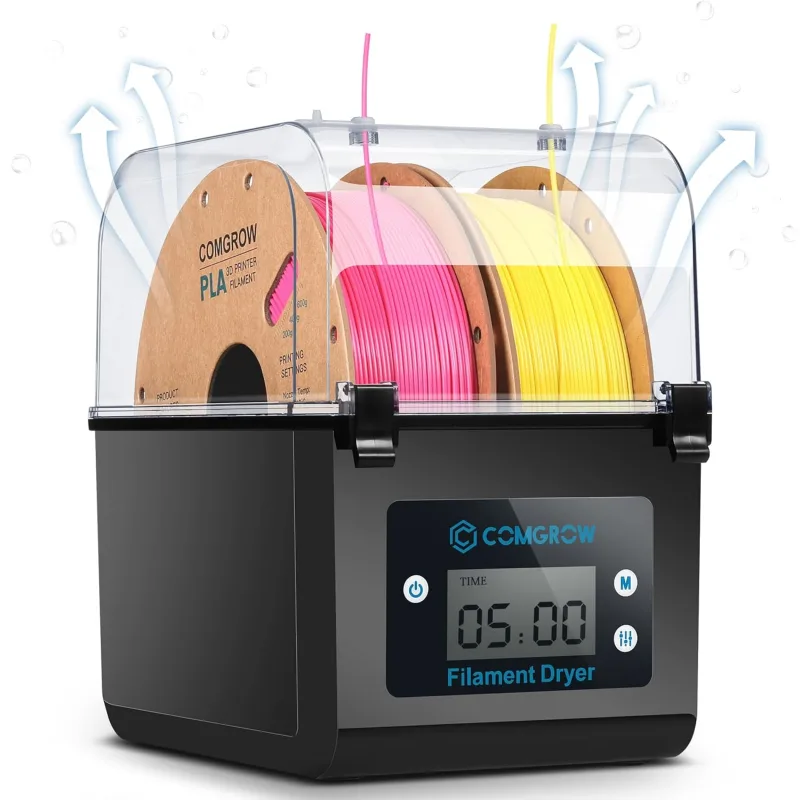
Yes - all the dryers listed above include a filament exit port so the filament feeds directly from the heated enclosure into the printer. This keeps the filament at low humidity throughout the print job.
Shop computer and office — Computer and Office →